Wednesday, June 24, 2009

Josh Hutcherson Briefs

PROCESSING PLANT PRODUCTS AND REFINEMENT IN SALTA


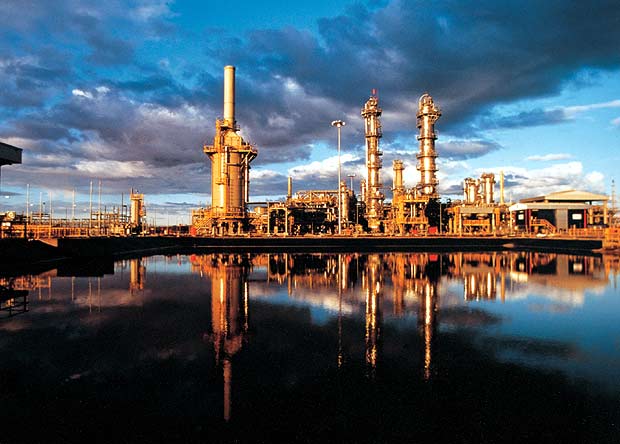
In Campo Duran in the province of Salta, is the only refinery north of the country, Refinor, to receive crude oil and natural gas from the west basin and Bolivia, through two pipelines, one pipeline and a pipeline. Thus, Campo Durán has become a hub for Latin American products and is the most important distribution channel for all liquids that are generated in the Northwest Basin of Argentina.
processes that take place in our distillery

Refinor is a leading integrated business links in the Oil and Gas North Argentino.Las Refinor activities that are present are:

• Oil Refining • Gas Industrialization
• Transportation Product Marketing and Sales

• Petroleum Refining and Processing Gas

For products that are then marketed, Refinor account with the following processing plants:
• An atmospheric distillation unit oil (Topping).
• A vacuum distillation unit.
• A naphtha hydrotreating unit.
• A catalytic reforming of naphtha (Reforming).
• Two processing units of gas fractionation turboexpansión and LPG (Liquefied Petroleum Gas as its acronym in English)
• In addition to a production facility and ancillary services (industrial water, steam, electricity, air) used in different processing plants . Topping as
Both Vacuum and Physical Turbex are processes where hydrocarbon fractions separated from oil or gas, the difference of boiling points thereof. In the only process where chemical reaction is in Reforming, where modification of the molecules of a virgin naphtha cut, we aim to obtain a product with improved properties for motor gasoline.


Topping Topping is an unconventional features 4 fractionation towers, where the products are separated by difference in boiling points, trying to optimize the quality of the various cuts, as well as the performance thereof.
crude oil purchased by Refinor is stored in tanks and then preheated in a heat exchange network, in order to use the energy available in hot process streams and then are heated in an oven, where it reaches temperature needed for distillation, which takes place in a particular arrangement of the 4 towers getting columns:
• LPG, which is charged to the fractionation of Turbex
• Nafta Virgin
• Gas Oil, Heavy
• Vacuum Gas Oil (paraffin)
• Fuel Oil. Reforming


is a plant in which there is a catalyzed chemical reaction, which converts a low-octane gasoline in a gasoline high octane number thus improving the compression self-ignition resistance.
The adaptation process is a naphtha stream will be charged to the reforming reactor, so removed that deactivate the catalyst components (sulfur, nitrogen compounds, arsenic, etc.), then the current is heated first to a network heat exchange and then an oven to be charged to the reactor where it finally adjust the structure of the molecules of the virgin naphtha charged, resulting in a hydrogen-rich gas stream and a liquid stream is conditioned before being stored in tanks for further transport. Turboexpanders
fractionation

This process is Natural Gas from the wells, which is cooled to obtain a liquid stream, and then separate the components in the process of fractionation.

This process involves the following steps:
1. Dehydration of the load.
2. Expansion of gas for their energy and cool the gas stream until the liquid cargo which is then fractionated.
3. Compression of residual gas being returned to producers to be transported (TGN) to consumption centers.

fractionation step in loading the liquid stream obtained in step turbo expansion in the liquefied components are separated in the previous stage, from the most volatile to less volatile than distillation towers, obtaining:

1. Ethane (which is mixed with methane gas from the previous stage to be compressed and returned to the producers)
2. Propane and butane (which are stored in liquid spherical tanks)
3. Gasoline Finally, mixed with the virgin naphtha Topping.


Here I leave a few pages to know about the oil in Salta

production increases in Salta


price of oil in Salta

Side Effects Of Sugar Free Gold


Petroleum refining has evolved continuously in response to demand for better and different products by consumers. The original requirement of the process was to produce kerosene as a fuel source for lighting cheaper and better than whale oil. The development of internal combustion engine led to the production of benzene, diesel gasoline and diesel.
The evolution of the airplane was needed aviation gasoline and high octane jet fuel, which is a more elaborate form of the original product to refineries, kerosene.
existing refineries produce various products, many of which are used as feedstock for cracking processes and manufacture of lubricants, and petrochemicals.
be broadly classified as fuel, petrochemical feedstocks, solvents, process oils, lubricants and specialty products such as wax, asphalt and coke. Fuel


Main fuel products are liquefied petroleum gas, gasoline, kerosene, fuel for jet engines, the diesel fuel, heating oil and residual fuel.
liquefied petroleum gas (LPG), consisting of mixtures of paraffinic and olefinic hydrocarbons such as propane and butane, is produced for use as fuel, stored and handled in liquid phase under pressure. The GPL has a boiling point ranging from about 74 ° C to +38 ° C, colorless, and its vapors are heavier than air and extremely flammable. The important qualities of LPG from the perspective of health and safety at work, are pressure steam and pollutant control. Gasoline
. The most important product of the refinery is gasoline engine, a mixture of hydrocarbon fractions with relatively low boiling points, including the reformed gasoline, alkylate, naphtha, aliphatic (straight-run light naphtha), aromatic naphtha (naphtha cracker thermal and catalytic) and additives. Gas mixtures have boiling points ranging from ambient temperature to about 204 ° C and a flashpoint below -40 ° C. Critical attributes of the gasoline is the octane number (antiknock quality), volatility (starting and vapor lock) and pressure Steam (environmental control). Additives are used to improve gas mileage and provide protection against oxidation and corrosion. Gasoline used in aviation is a high-octane, a mixture specially designed to offer good performance at high altitudes.
The tetraethyl lead (PTE) and tetramethyl lead (PTM) are additives that improve fuel octane and knock qualities. In an effort to reduce lead in exhaust emissions from cars, these additives are no longer used on a regular basis, except gasoline used in aviation. To improve the qualities of the gasoline antiknock lead-free and reduce carbon monoxide emissions, rather than PTE and PTM are used etilbutiléter tertiary (ebete) metilbutiléter tertiary (Mbete) amilmetiléter tertiary (AMET) and other oxygenates.
Fuel for jet engines and kerosene. Kerosene is a mixture of paraffins and naphthenes, usually less than 20% of aromatic components. It has a flash point above 38 ° C and a boiling temperature range of 160 ° C to 288 ° C, and is used for lighting, heating, solvents and mixed with diesel fuel. Fuel for jet engines is a middle distillate kerosene whose critical qualities are the freezing point, flash point and the point of smoke.
commercial fuel for jet engines has a boiling range of about 191 ° C to 274 ° C, and fuel for jet engines for military use, a range of 55 ° C to 288 ° C.
distillate fuels. Diesel gas oil and domestic heating are colored mixtures of paraffins, naphthenes and aromatics, which sometimes contain moderate amounts of olefins. The distillate fuels have flash points above 60 ° C and boiling ranges of 163 ° C to 371 ° C., and often are subjected to hydrodesulfurization to improve stability. As fuel, when treated emit vapors that form flammable mixtures with air. Among the best qualities of distillate fuels are flash points and controlled drip, clean combustion, the absence of deposit formation in storage tanks and a cetane number of diesel gas oils suitable for a good start and a satisfactory combustion.
residual fuels. Many ships and commercial and industrial facilities use residual fuels or combinations of residual fuel and distillation, to generate energy and heat for processing. Residual fuels are liquid mixtures dark color and high viscosity of large molecules of oil, with flash points above 121 ° C and high boiling points. The critical specifications of residual fuels are viscosity and low sulfur content (to control environmental
).

Pokemon Gsc Bike Theme Piano Sheet

Oil Petroleum Products Oil


are the simplest organic compounds and can be considered as the main substances which are derived all other organic compounds. Hydrocarbons are classified into two main groups, open chain and cyclic. In open-chain compounds containing more than one carbon atom, carbon atoms are linked together forming a straight chain may have one or more branches. In cyclic compounds, carbon atoms form one or more closed rings. The two main groups are subdivided according to their chemical behavior in saturated and unsaturated. Alkanes


The open-chain saturated hydrocarbons form a peer group called alkanes or paraffins. The first four members are gases at room temperature and pressure, the intermediate members are liquids, and heavier members are semisolid or solid. The oil contains a variety of saturated hydrocarbons, and petroleum products as gasoline, oil fuel, lubricating oils and paraffin are mainly in mixtures of these hydrocarbons that vary from light liquids to solids.


Alkenes The group of alkenes or olefins is formed by open-chain hydrocarbons in which there is a double bond between two carbon atoms. Like the alkanes, the lower members are gases, intermediate compounds are liquids and higher are strong. The compounds of the group of alkenes are more reactive than saturated compounds chemically. Alkynes


members of the group of alkynes containing a triple bond between two carbon atoms of the molecule. They are very active chemically and do not occur free in nature.

Free Kundali Software